WEI Tanzania: Expanding Access to Education for Girls
After strengthening its proposal writing and fundraising strategy through RedR’s training and coaching, Women Empowerment Initiative (WEI) Tanzania secured a €14,000 grant to support girls at risk of leaving school.
WEI Tanzania is a local organisation working with women, girls, and marginalised communities in central Tanzania to improve access to education, livelihoods, and essential services. Despite seeing clear needs on the ground, their work has often been limited by access to funding.
We see the problems, but to tackle those problems, it needs funds. We don’t have enough to reach all those communities.
– Milka Otieno, Chair
After taking part in RedR’s training on Proposal Writing and Resource Mobilisation, delivered as part of RedR’s broader work with the Global Nutrition Cluster Operations Team and Action Against Hunger to strengthen local organisations in Uganda and Tanzania, WEI Tanzania shifted its approach to fundraising. A move that has led to new funding and opportunities to better support girls at risk of leaving school.
Reaching Communities Facing Complex Challenges
WEI Tanzania works closely with communities, local authorities, and volunteers to address barriers that affect women and girls. These challenges are especially pronounced in rural areas, where limited access to services, long travel distances and social expectations make it harder for girls to stay in school.
“We have to create awareness in the community to remove the barriers,” says Advera Medard, Livelihood Project Officer. “It is not something that changes quickly.”
Building Stronger Fundraising Approaches
Before attending the training, WEI Tanzania’s approach to fundraising was mainly reactive. The team would respond to open calls for funding without a clear strategy or strong match with donor priorities.
Through RedR’s training, WEI staff strengthened skills in proposal writing, planning, and analysing community needs. This included learning how to clearly define problems, use evidence, and align their work with funder priorities. The training also helped the organisation take on a more focused and strategic approach to fundraising.
After attending the training, we have gained a better understanding on how to develop a funded proposal, including how to clearly articulate our strength as an organisation and how to clearly define the problem using evidence.
– Joyce Kyando, Managing Director
This shift has strengthened confidence across the team. More staff are now able to contribute to proposal development, and there is a stronger shared understanding of how to present WEI’s mission and activities.
Turning Learning into Results
A key part of this was the coaching provided alongside the training. After the course, WEI received practical, hands-on support to refine a proposal, including individual feedback from the trainer. This type of support is central to RedR’s approach, supporting organisations as they turn learning into real funding outcomes through coaching and practical application.
These changes had a direct impact when WEI applied for funding from the Hilden Charitable Fund. By applying both training and coaching support from RedR, the team focused on aligning their proposal closely with both the funder’s priorities and their own work.
We are now confident to say that we are writing very competitive proposals. We have also learned how to link donor priorities with our mission.
– Advera Medard, Livelihoods Project Officer
“We realized that we need support from people who know how funders think,” explains Milka, “Making sure it was aligned to the right activities made a big difference.”
With this approach, and targeted support from RedR’s coaching scheme to refine their proposal, WEI was successful in securing a €14,000 grant from the Hilden Charitable Trust.
Supporting More Girls to Stay in School
The funding is now being used to support girls who are at risk of leaving school. WEI Tanzania plans to work across three wards, covering nine schools. From these schools, the organisation aims to support at least 300 children to remain in education by addressing the key challenges they face.
“We want to help not less than 300 school children who are at risk of dropping out,” says Joyce. “We want to fill the gaps that cause them not to stay in school.”
The project focuses on practical support that reflects the realities in each community, including social, economic, and health-related barriers.
Looking Ahead
WEI Tanzania hopes that this experience will allow them to expand their work to other areas facing similar challenges.
“We might be able to expand into other areas with similar challenges based on our own vision and mission,” says Milka. “Even the government can see the impact we have”
With stronger skills, increased confidence and a clearer strategy, WEI Tanzania is now better positioned to continue its work and reach more communities in the future.
About the Project
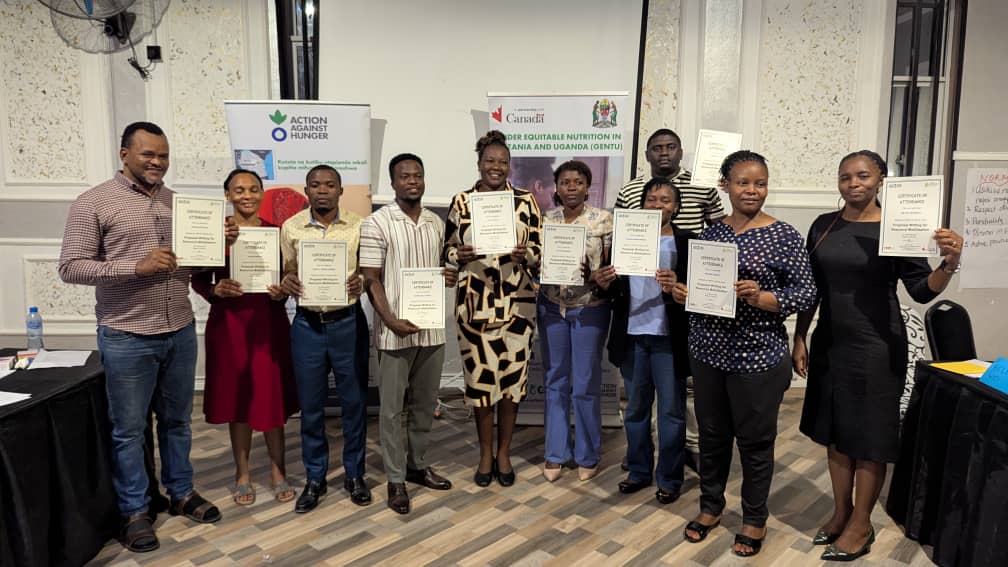
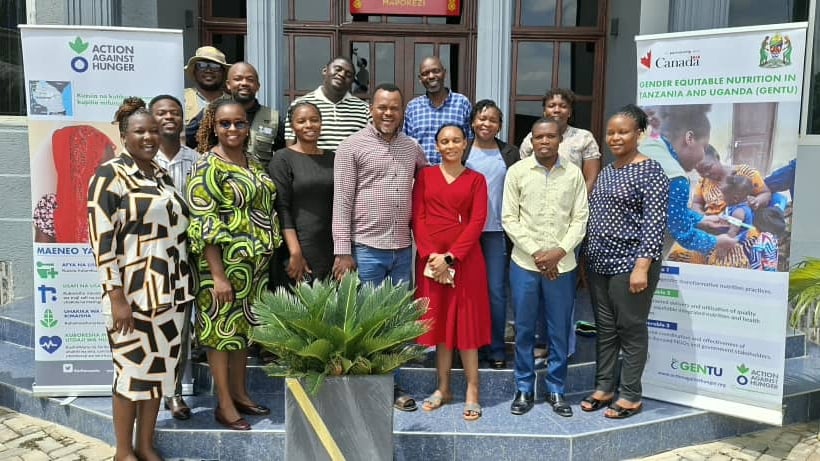
This work is part of the Gender Equitable Nutrition in Tanzania and Uganda project (Gentu), implemented by ACF Tanzania, in partnership with the Global Nutrition Cluster and RedR UK, with funding from Global Affairs Canada. RedR is supporting local organisations in Tanzania and Uganda to strengthen their ability to design high-quality proposals, access funding, and deliver effective programmes.
RedR’s approach is based on a clear theory of change: when local organisations have access to relevant training and support, including skills in planning, coordination and accessing funding, they are better able to design and lead programmes that reflect the realities of their communities. This leads to more responsive, accountable, and locally led action.
Through a combination of training and coaching, the programme aims to strengthen not just individual skills, but the long-term capacity of organisations like WEI Tanzania to sustain and scale their work.
Support WEI Tanzania
If you would like to learn more about WEI Tanzania’s work you can do so directly at the link below.