Localisation in Practice: How RedR Contextualises Training for the DRC
At RedR, localisation is not an abstract principle but a practical, deliberate process that shapes how training is designed, delivered, and sustained. As part of the H2H Democratic Republic of Congo (DRC) project implemented by the the CONAFOHD consortium (CONAFOHD, Data Friendly Space, RedR UK, and Sphere), RedR is applying this approach to ensure that learning content is not only translated, but genuinely contextualised and accessible to local and national humanitarian actors across DRC.
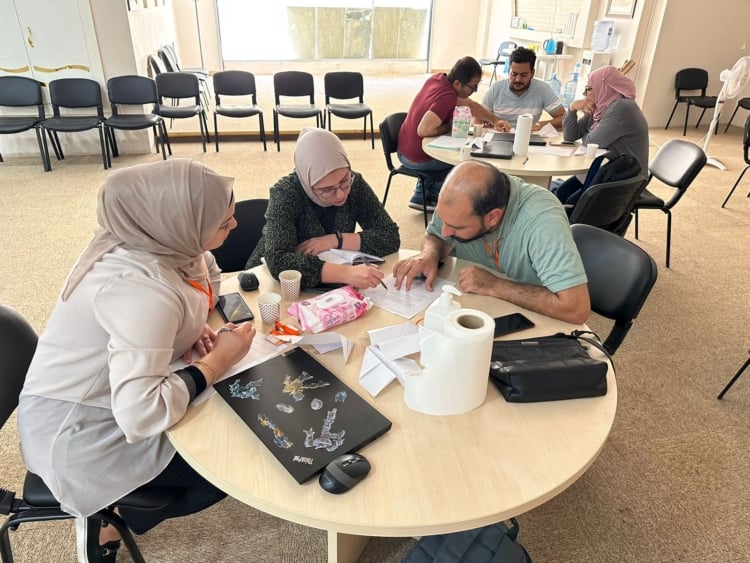
A defining feature of this project is our iterative co‑design process, working with CONAFOHD to develop three self-paced e-modules as well as a six-week online facilitated course on proposal writing and resource mobilisation. Training priorities in this case were identified by CONAFOHD and its member organisations,ensuring that learning content responds directly to locally identified capacity gaps rather than externally defined assumptions. RedR developed initial learning objectives, module outlines, and proposed session plans, which were then reviewed in detail by CONAFOHD. For the case of the e-modules, feedback is gathered across several rounds, which allows for the final content to reflect CONAFOHD’s deep contextual knowledge and strategic priorities as well as RedR’s technical expertise. This iterative co-design approach ensures content is both technically sound and locally anchored.
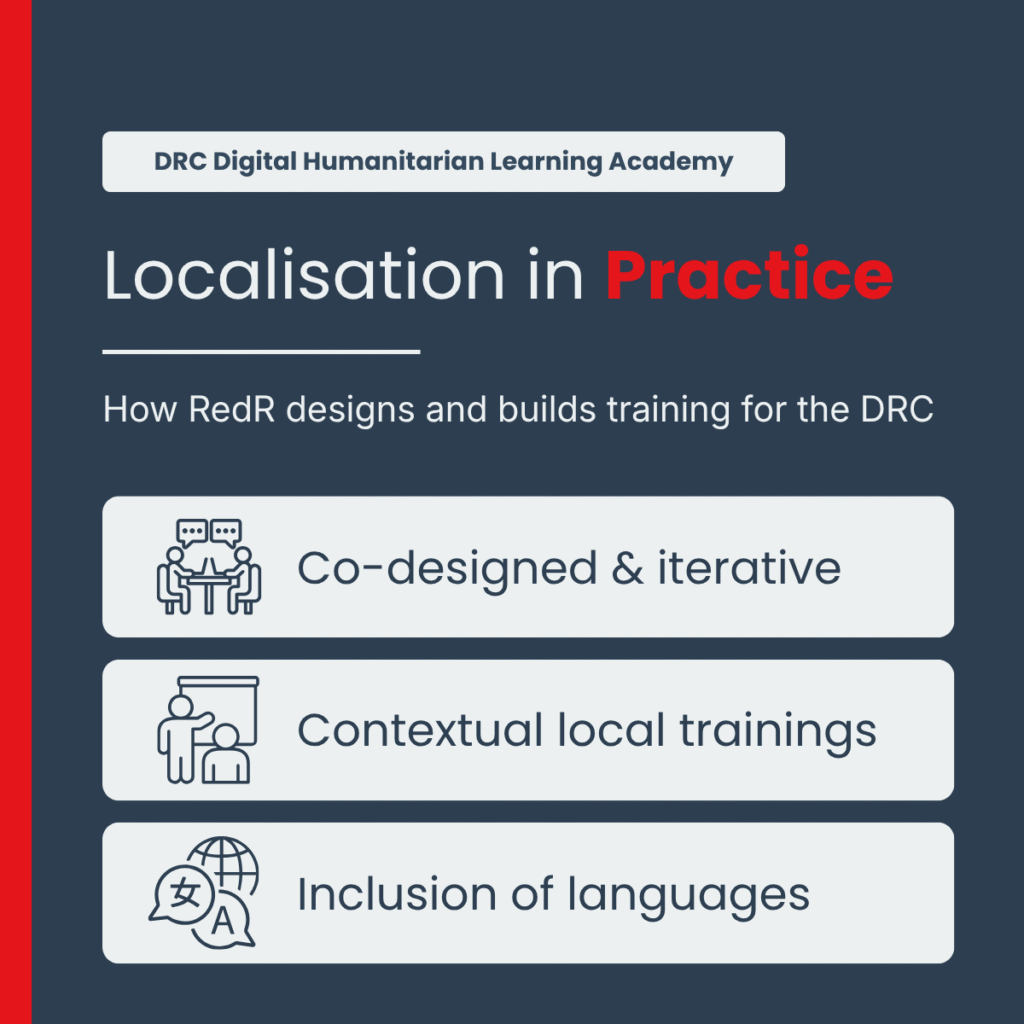
RedR applies a contextualised course design process to adapt existing materials or develop new ones. Rather than relying on generic or globally framed examples, training modules are built around realistic scenarios drawn from Congolese humanitarian operations. Donor landscapes, coordination mechanisms, and operational constraints specific to the DRC are embedded throughout the curriculum. This allows learners to immediately recognise their own working environment in the training, reducing the gap between learning and application.
A key element of localisation in practice is how training is delivered.
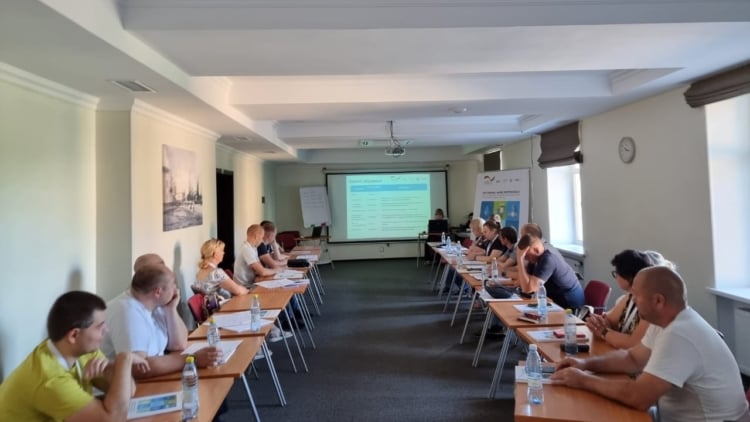
RedR supports facilitated learning cohorts led by local trainers who bring both contextual and linguistic expertise. These facilitators (Esperant Mulumba and Symphorien Bikusyo Alimasi) understand the realities faced by Congolese organisations and are able to deliver training in ways that resonate culturally and professionally. Their involvement strengthens learning outcomes, enabling participants to engage critically with the content, ask context‑specific questions, and apply learning directly to their own organisational challenges.
Language accessibility is equally central. Training content for the H2H Democratic Republic of Congo (DRC) project is developed in French, Lingala, and Congo Swahili, reflecting the linguistic diversity of humanitarian actors across the country. Translation is treated as a quality‑critical process, beginning with the development of glossaries reviewed by thematic and language experts. All learning components,including written materials, visual assets, assessments, and multimedia content,go through multiple review and validation stages with local stakeholders to ensure clarity, consistency, and relevance.
RedR also invests in developing animated videos as user‑friendly learning tools that are carefully adapted to the local context. Characters are designed to reflect familiar professional roles and environments, while voiceovers are recorded using the voices of real people from the country. This approach not only improves comprehension but reinforces a sense of ownership and recognition among learners.
Content is designed for low‑connectivity settings, with light weight design of e‑learning modules and low‑bandwidth formats for online learning that ensure access for organisations operating in remote or resource‑constrained areas.
The H2H Democratic Republic of Congo (DRC) project showcases RedR’s priority of connecting local priorities, languages, expertise, and ownership to create learning that is relevant, accessible, and grounded in real humanitarian contexts.