
This Field Tool is a concise, clickable operational guide for partners implementing Category I Humanitarian Repairs.
Category I repairs are defined as light and medium repairs addressing non‑structural damage only, aimed at restoring minimum habitability and the thermal envelope of war‑damaged housing. This tool translates the Shelter Cluster SOP into a practical, field‑usable guidance for assessment, decision‑making, coordination, implementation, and closure.
This Field Tool was developed by RedR UK as a simplified operational guide, based on the SOP developed by the Ukraine Shelter Cluster Technical Working Group (TWIG), under the leadership and coordination of the Shelter Cluster Ukraine.
Why it matters
Ukraine’s humanitarian housing repair response involves hundreds of organisations, local authorities, contractors, and community actors working across different regions and operational contexts. While the Shelter Cluster SOP provides the governing framework for Category I Humanitarian Repairs, field teams often need rapid, practical guidance to support day-to-day decision-making.
This Field Tool translates the SOP into a concise, operational resource that can be used by engineers, social assessors, programme teams, coordinators, and contractors. It helps users quickly navigate key decisions on eligibility, damage classification, technical assessment, coordination requirements, scope of works, quality control, accessibility, and safety considerations.
By providing a clear and consistent reference point, the tool supports:
- More consistent application of Shelter Cluster guidance across partners and locations;
- Faster and more confident field-level decision-making;
- Improved coordination with local authorities and state compensation mechanisms;
- Better quality assurance and accountability throughout the repair process;
- Safe and appropriate targeting of humanitarian housing repair assistance.
Developed by RedR UK in close collaboration with the Shelter Cluster in Ukraine Technical Working Group (TWIG), the tool aims to strengthen the quality, consistency, and accountability of Category I Humanitarian Repairs across Ukraine’s humanitarian response.
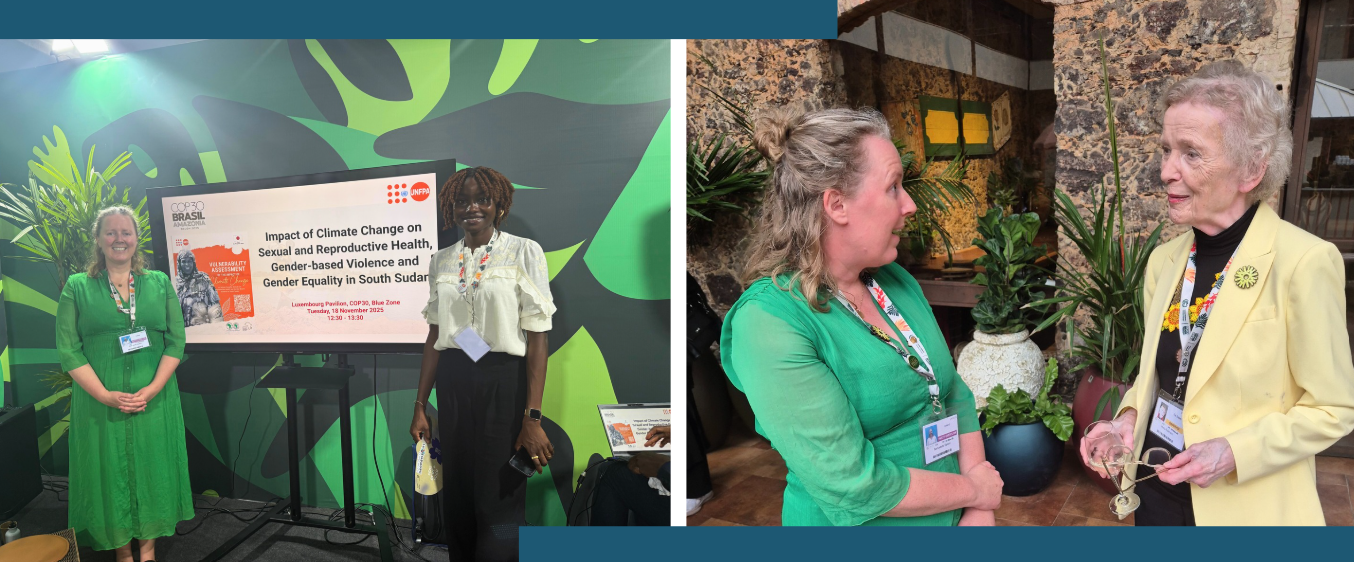
At COP30, our CEO, Bernadette Sexton, joined a panel hosted by UNFPA at the Luxembourg Pavilion focused on the impact of climate change on sexual and reproductive health, gender-based violence, and gender equality. She also met Mary Robinson, first female President of Ireland, former UNHCR High Commissioner, Elder, and leading climate justice advocate.
Climate change is not gender neutral. Pre-existing inequalities are intensified directly or indirectly, whether through slow-onset degradation or rapid-onset disasters. There are solutions.
Key to the conversation:
Sexual and Reproductive Health (SRH)
Climate change amplifies SRH risks through disruptions to health systems, harmful coping strategies, displacement, and reduced access to essential services. In many contexts, SRH services, including antenatal care, contraception, menstrual hygiene, and safe delivery, are among the first to collapse following climate-induced shocks, whilst heat stress increases risks for pregnant women, including stillbirth and complications.
Gender-Based Violence (GBV)
Resource scarcity and economic strain escalate domestic violence and intimate partner violence during droughts, failed harvests, or lost livelihoods. Displacement and shelter insecurity increase exposure to sexual exploitation and abuse, trafficking, and harassment. Inadequate WASH infrastructure forces women and girls to travel long distances for water or latrines, heightening the risk of assault. Child marriage rises as a coping strategy during climate-induced economic stress. Breakdown of protection systems in disasters leaves communities without safe reporting pathways or survivor services.
Climate Change and Gender Equity
Climate change exacerbates structural inequalities, limiting women’s livelihoods, safety, agency, and participation in decision-making. Unequal labour burdens, especially in water and fuel collection, intensify as droughts worsen or ecosystems degrade. Women’s livelihoods (agriculture, informal work, small enterprises) are disproportionately impacted by climate variability. Exclusion from climate decision-making persists in local and national adaptation planning processes. Limited access to climate finance for women-led organisations prevents equitable adaptation implementation. Education disruptions driven by climate shocks reduce future economic resilience for girls and young women.
Solutions
- Integrate SRH, GBV, and gender equity into climate adaptation
Investments should prioritise gender-responsive planning and risk assessments, including through practical training and capacity development for frontline actors. - Infrastructure and technical systems are critical for gender protection
Infrastructure failures, collapsed clinics, inaccessible water systems, and unsafe shelters create downstream GBV and SRH risks. - Preparedness, early action, and DRR reduce gendered harm
Early warning, community preparedness, and risk-sensitive planning reduce not only economic losses but also GBV and SRH impacts. - Invest in the adaptation workforce
Strengthening the global adaptation workforce, including gender-aware humanitarians, engineers, and government planners, is a high-return investment area.
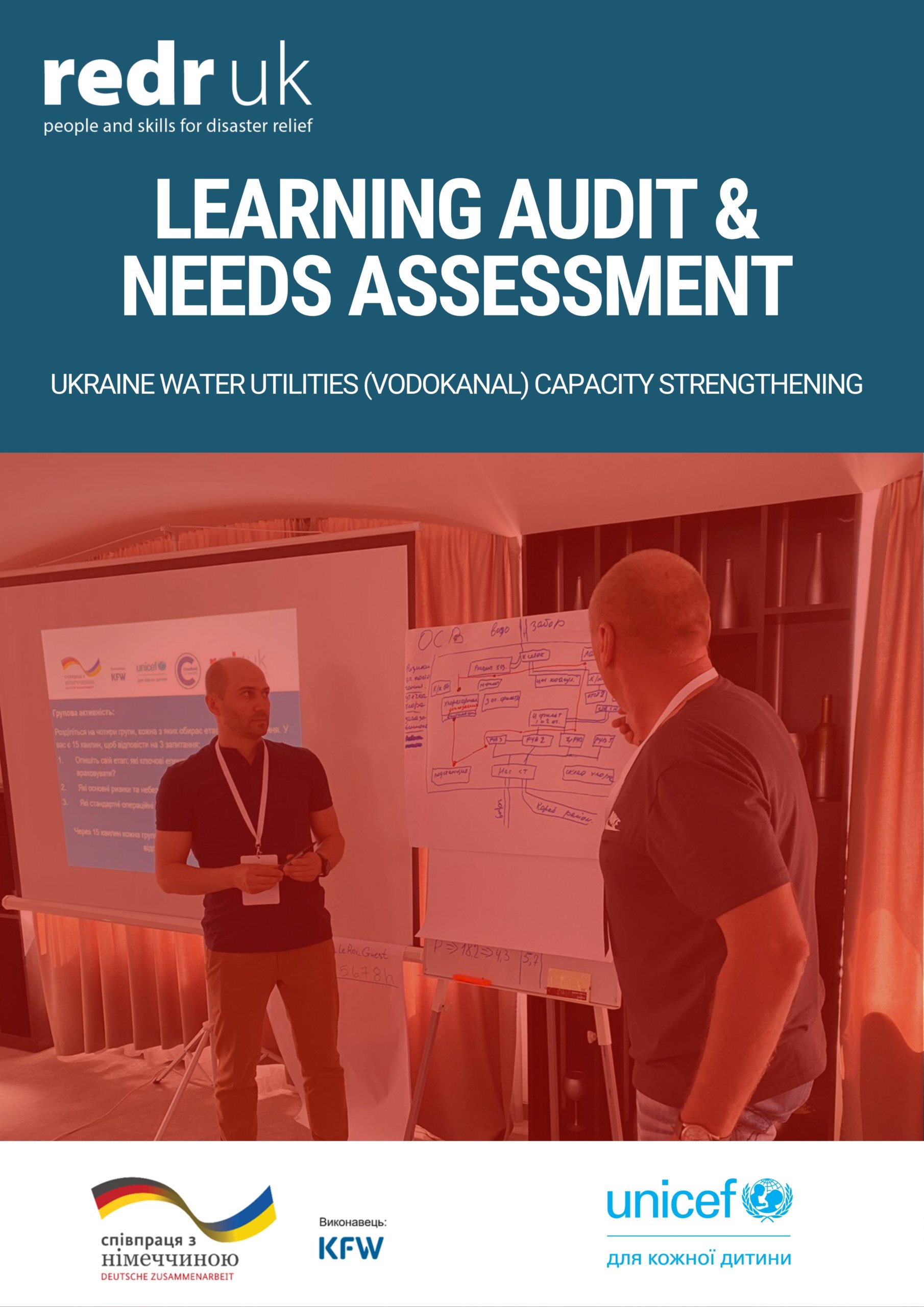
This Learning Audit & Needs Assessment identifies capacity gaps and learning needs amongst Vodokanal (Water Utilities staff in Ukraine.
Understanding these gaps is essential for developing targeted training programmes, that can enhance the skills and knowledge required to address the complex challenges posed by the ongoing conflict.
The LNA also assessed the existing strengths among vodokanal staff, so RedR can recommend the best ways that partners can leverage best these capabilities.
Using the findings to train responders on the most urgent topics
RedR conducted this in-depth and detailed Learning Needs Assessment to better inform the ongoing capacity strengthening program for Ukraine’s water utilities (vodokanals). The overarching questions that this Learning Needs Assessment seeks to assess are:
- What are the current capacity gaps and learning needs among vodokanal personnel in Ukraine?
- What are the capacity strengths among vodokanal personnel involved in water supply and sewage services?
- How can RedR UK respond to the needs of the vodokanals in ways that are most appropriate and relevant?
- What are the capacity needs for future programming of RedR and other partners?
It enables RedR to tailor their response to the evolving needs of the vodokanals in Ukraine. By understanding the specific learning needs and capacity gaps, RedR can provide training that is most relevant and impactful, thereby enhancing the overall WASH service delivery in Ukraine.
Key findings
The main findings of this learning needs assessment are:
- Demographics of Respondents: A total of 70 responses were received, with 69 from the target learner groups (Senior Management, Engineers, Operators). The majority of senior managers (51%) and engineers (eighteen) have worked at the vodokanal for more than five years. Operators also largely have over five years of experience (six out of eight respondents). Respondents are located across 17 oblasts, with 41 responses from UNICEF’s priority oblasts
- Training Topic Priorities: Respondents identified several priority training topics essential for improving their response capabilities:
- Operators: Highest priority topics identified by operators, engineers, and senior managers are Modern Water Treatment and Supply Systems and Energy Efficiency and Power Optimization. High priority topics include Modern Wastewater Treatment and Discharge Management, Water Quality – Measurement and EU Standards, and Leak Detection.
- Engineers: Highest priority topics identified by engineers, senior managers, and operators are Modern Water Treatment and Supply Systems, Modern Wastewater Treatment and Discharge Management, and Energy Efficiency and Power Optimization
- Senior Managers: Highest priority topics identified by senior managers, engineers, and operators are EU Standards and Best Practice, Policy and Management, and Investment Planning.

This Cross Cutting Issue (CCI) Guidance Framework is a compilation of the key tools, resources and guidance that organisations can use to strengthen integration of CCIs in WASH programming throughout the humanitarian program cycle.
This compilation was the result of a consultative process with key stakeholders and review of available resources in February 2024. It consolidates the work of Working Groups developing cross-cutting approaches, and reflects the current priority issues for WASH in Ukraine.
It enables WASH actors in Ukraine to readily access support, aggregating existing guidance and best practices in WASH thematics.
This framework will guide you on how to meaningfully ensure participation, minimize existing barriers and ensure safe and equitable access to WASH interventions.
Why do cross-cutting issues matter?
Integrating CCIs into WASH programming makes humanitarian services and responses safer, more effective and more timely by proactively identifying and mitigating the barriers and risks that people face in accessing assistance.
By addressing CCIs in all stages of the programme cycle it anchors protection mainstreaming principles into the WASH response ensuring adherence to the right to WASH services and human-rights. Integrating CCIs into WASH in Ukraine will contribute to ensuring ‘the most vulnerable people affected or displaced by the war can access basic WASH services and materials to maintain basic hygienic practices, with a focus on people with disabilities including children with disabilities and persons of older age, women and girls, and minority groups.’ Failing to address CCIs in WASH compromises the effectiveness of the response.
The people of Ukraine — mainly the most vulnerable: women, children, older people, marginalized groups such as people living with HIV/AIDS, the Roma, lesbian, gay, bisexual, transgender, queer, intersex (LGBTQI+) communities and people with disabilities— continue to bear the brunt of the impacts of the conflict.