How RedR delivers Quality Services
Explore how RedR delivers quality
RedR exists to strengthen humanitarian response, and the quality of that response depends on how well practitioners are equipped, recognised, and supported to do their work. Our approach to quality is built on a foundation we helped create: HPass, a global framework of standards for humanitarian learning and competency assessment.
As both the creator of HPass and an organisation that embeds it across everything we do, RedR is uniquely positioned, not just as a provider of high-quality services, but as a global standard-setter for the humanitarian sector.
A Standard Built With the Sector, For the Sector
HPass was developed through consultation with more than 400 organisations across 60+ countries. These are standards shaped by the realities of humanitarian work across every context, not designed in isolation.
The result is a unified system that ensures practitioners everywhere can learn, develop, and be formally recognised to the highest possible benchmark. They ensure sector wide standards of excellence.
The result is a unified system that ensures practitioners everywhere can learn, develop, and be formally recognised to the highest possible benchmark. They ensure sector wide standards of excellence.
Localised and Accessible by Design
Global standards only deliver impact when they’re accessible locally. RedR advances localisation by ensuring our services are contextualised, culturally grounded, and delivered in the languages practitioners actually use.
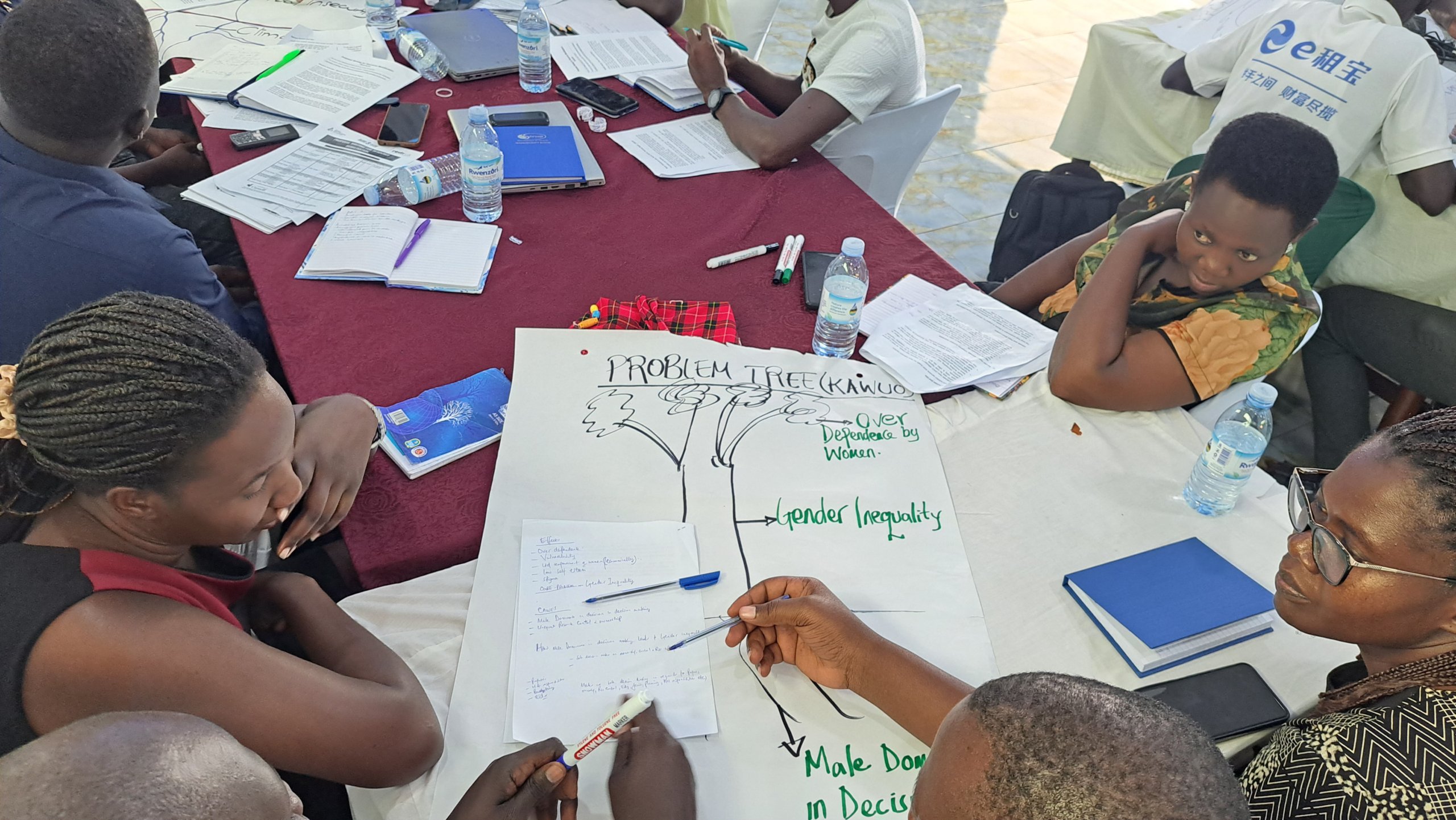
We have designed and delivered programmes in more over 10 languages, including Congolese Swahili, Lingala, Burmese, Arabic, and Ukrainian, adapting global best practice to local realities. This removes linguistic and cultural barriers, empowers local responders to lead, and ensures that high-quality learning and assessment are within reach for all practitioners, wherever they work.
The HPASS Standards
HPass comprises of interlocking components, each addressing a different dimension of quality:
Humanitarian Learning Standards
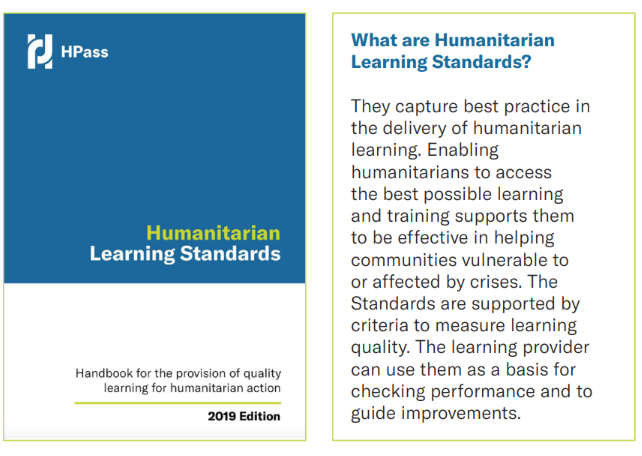
These ensure that learning programmes are relevant, effective, and inclusive. They guide everything from identifying what practitioners genuinely need to learn, through to how programmes are designed, delivered, assessed, and continuously improved. By embedding these standards across all our programmes – alongside technical, sector-specific standards — RedR delivers capacity building that produces stronger outcomes and a more capable humanitarian workforce.
Standards for the Assessment of Humanitarian Competencies
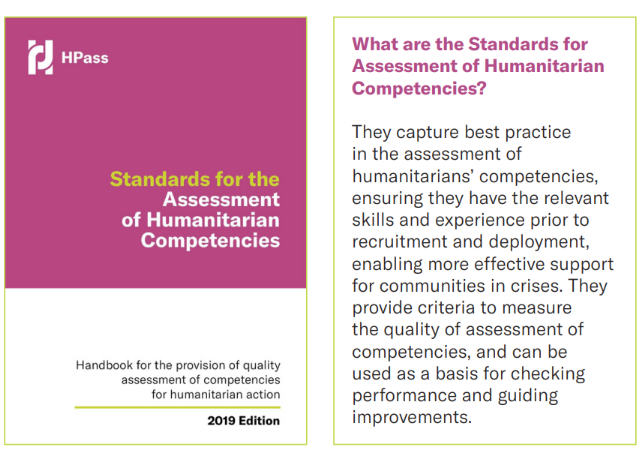
These establish a sector-wide benchmark for quality, consistency, fairness, and credibility in competency assessment. They provide a rigorous basis for recognising and validating practitioners’ knowledge, skills, attitudes, and behaviours — strengthening recruitment, professional mobility, and career development across the sector. For local practitioners in particular, formal credentialing through these standards opens doors that would otherwise remain closed.